
Thursday, 16 April 2020
Lichfield Cathedral Choristers and Football
The 1996 Lichfield Cathedral School magazine includes the following exchange between the then Head Chorister and English football professional and personality, Jimmy Hill:


Saturday, 7 March 2020
Richard Greening: A Personal Recollection
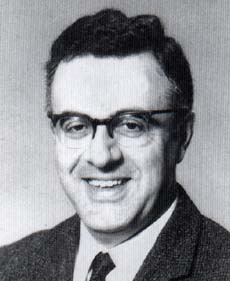 Richard Greening was Organist of Lichfield Cathedral from 1959 to 1977, but we were contacted by Alan Whitaker in 2010 who offered a personal recollection of Greening in his time before Lichfield.
The following material was previously published on the Cathedral Choir's website, but has been reproduced, more fittingly, here.
I sang in the choir at St Giles' Church in Oxford from 1949 until 1967, and then again for several years later on when I and my two sons sang together in the choir under Peter Ward Jones until we left the Oxford area in 1987.
When I first joined the choir as a probationer, the organist was Mr John Cantrell but when he applied for, and got, the post of organist at Chelmsford Cathedral (I believe) he was replaced by Richard Greening. Thus I sang under him in the choir of St Giles' church for the whole of his time as organist and choirmaster. I have nothing but extremely happy memories of that time. The choir was not huge, nor was it the "testing ground" for boys whose parents had aspirations for them to sing in one of the collegiate choirs in Oxford.
I remember him as an organist of prodigious talent, a choir master of great depth, but who built up excellent relationships with many of the boys in his charge. The boys' choir was made up of boys from schools as diverse as pure state schools, church schools and even New College and Magdalen College schools, so the boys had a huge range of backgrounds. One of the things I remember most vividly was during either our Tuesday or Thursday boys practices he encouraged us to suggest variations in pointing from that in our Parish Psalters. Those which he liked, he incorporated and at the Friday rehearsal with the gentlemen of the choir, they were told about them and we sang them from then on.
My family, unlike that of some of the other boys, had no direct association with the university, but Richard made a friend of my father and ultimately, my proudest achievement was to sing the whole of the solo treble part of Hear my Prayer in a liturgical context - standing beside him at the 'pusher' organ console at the back of the church playing so very beautifully with the rest of the choir singing their hearts: an experience for which I can never give enough thanks.
He was quite a disciplinarian, invoking hefty fines, records of which he kept in the choir register, for misbehaviour, but he had a soft heart when it came to pay-day. I had on occasion, lost all my pay (six shillings and sixpence in hand [the same into a bank account for us when we had to leave]), on account of fines, but I never went home empty handed! One other chorister regularly 'lost' all his pay. He too never went home with empty pockets. We could never be sure how much we would get, though, so it was worth turning up, and the singing was always fun.
I remember a couple of weeks when Richard was on holiday and choir practices were taken by a very young Bryan Kelly, who I was later to come across as Musical Director of the Oxford Operatic Society and who has since become a composer whose work I still enjoy singing when I can. He even wrote a wedding anthem for St Giles' Choir to sing at one of its member's wedding. He was a close friend, but my wife and I both sang in the first performance, and our mutual friend and his wife came back from their honeymoon, two weeks later they sang it again at St Giles for my wedding! This was, of course some years after Richard Greening had left St Giles.
During his time at St Giles he took a full part in church activities and was, I believe an active (if ex-officio) member of the PCC. When it came to the proposal to refurbish and move the Hill, Norman and Beard organ from inside the Lady Chapel to the space under the tower, he was as far as I can recall, an enthusiastic proponent - even though it meant accompanying the services on a tiny harmonium when the organ was in bits.
These recollections are just the tip of the iceberg. I fear I do not know if they are of any great value, but it would not be overstating the case that I really was very fond of Richard Greening as a boy. I believe that he saw potential in me and that he did his best to promote that. I have missed him all my life, and never forgotten the immense good he brought into it. He truly was a very kind and generous man and, like most organists and choir directors, he gave of himself to anyone who would pay heed to him and he formed very special friendships with several other members of the choir - especially with those in the back row and included my father, (a non-singer), among those. I am still a chorister, using what is left of my voice to the glory of God at St Nicolas' Church, Newbury under Sarah and Nic Cope's direction. Like Richard, they too are very special people.Alan subsequently got in touch again, to add the following details to his account:
I have found the Choir Register extract which I thought that I still had. It is a question of Bad News/Good News, though, as while I can pinpoint his last choir practice fairly precisely, - the register changes into a different handwriting (and pen) on Sunday 31st July 1955 - I think that he may still have been around for the rehearsals immediately prior to his wedding on 6th August 1955.
My parents took me away on holiday to Kent on his wedding day, so I could not attend, but the rest of the choir would have done so. I would, though, have warn you that there is no documentary evidence for the choir having done so, as the register seems not to cover the fairly considerable number of weddings and funerals we sang for as a choir in the 1950s. Equally, there may have been an augmented front row as the choir was decimated by holidays at the time. I was then Head Boy and the register shows that there were, including me, eight full choristers at the time with three probationers, and six gentlemen at the time. The following morning (Aug 7) there were eight boys (including one of the probationers) present and there were two full choristers, (me and one other), together with two probationers who were away on holiday.
The change of handwriting is quite dramatic and in any case August the sixth resonated with me for several other special people who have birthdays on that day. I am certain of it.
The opening date of his stint as st Giles' Organist and Choirmaster is more difficult as I originally made the copies to try to locate the date and the personnel who were involved in making a recording of several psalms - entirely for internal consumption. These were recorded under the leadership of Richard Greening's successor, Kenneth MacIntosh. The copies I made from the old registers go back no further than early 1955.
Sunday, 22 December 2019
Advent Hope (1998) from Lichfield Cathedral on the BBC
To celebrate the 21st anniversary of the live broadcasts in 1998, the four programmes which made up the BBC's Advent Hope series have been published on each of the Sundays of Advent on YouTube over the past four weeks.
The programmes were originally broadcast live at 9.30am, having been preceded by congregational rehearsals at 8.45am. After the broadcasts, the Cathedral Choir went on to sing Eucharist at its usual 10.30am slot on the second, third and fourth Sundays of Advent, and Evensong at 3.30pm on the second and third Sundays of Advent. Eucharist on the first Sunday of Advent was sung by the Cathedral's Chamber Choir, as the Cathedral Choir was singing the Darkness into Light carol service later in the evening. Evensong on the fourth Sunday of Advent was sung by the Chamber Choir, as the Cathedral Choir did the BBC Radio 3 Choral Evensong broadcast on Wednesday 23 December, and the choristers sang the Radio 4 Daily Service on Christmas Eve. (The Chamber Choir then went on to broadcast Midnight Mass on Christmas Eve on BBC Radio 4.) Christmas 1998 was a media-rich time at Lichfield!
The Advent Hope services were all introduced by the then Dean, The Very Reverend Dr N T Wright; the Organist and Master of the Choristers at the time was Andrew Lumsden, and the Assistant Organist was Robert Sharpe.
Advent Hope II
(originally broadcast 6 December, 1998; published 8 December, 2019)
Advent Hope III
(originally broadcast 13 December, 1998; published 15 December, 2019)
Advent Hope IV
(originally broadcast 20 December, 1998; published 22 December, 2019)
The programmes were originally broadcast live at 9.30am, having been preceded by congregational rehearsals at 8.45am. After the broadcasts, the Cathedral Choir went on to sing Eucharist at its usual 10.30am slot on the second, third and fourth Sundays of Advent, and Evensong at 3.30pm on the second and third Sundays of Advent. Eucharist on the first Sunday of Advent was sung by the Cathedral's Chamber Choir, as the Cathedral Choir was singing the Darkness into Light carol service later in the evening. Evensong on the fourth Sunday of Advent was sung by the Chamber Choir, as the Cathedral Choir did the BBC Radio 3 Choral Evensong broadcast on Wednesday 23 December, and the choristers sang the Radio 4 Daily Service on Christmas Eve. (The Chamber Choir then went on to broadcast Midnight Mass on Christmas Eve on BBC Radio 4.) Christmas 1998 was a media-rich time at Lichfield!
The Advent Hope services were all introduced by the then Dean, The Very Reverend Dr N T Wright; the Organist and Master of the Choristers at the time was Andrew Lumsden, and the Assistant Organist was Robert Sharpe.
Advent Hope I
(originally broadcast 29 November, 1998; published 1 December, 2019)
(originally broadcast 29 November, 1998; published 1 December, 2019)
Advent Hope II
(originally broadcast 6 December, 1998; published 8 December, 2019)
Advent Hope III
(originally broadcast 13 December, 1998; published 15 December, 2019)
Advent Hope IV
(originally broadcast 20 December, 1998; published 22 December, 2019)
Friday, 1 November 2019
Lichfield Cathedral Choir Programme: USA Tour 1988
Choir tours remain part of the outreach work that the Cathedral Choir does today. Having recently found the paperwork while clearing out, this post is a transcribed copy of the itinerary of the two-week tour that the Choir undertook immediately after Easter Day (Sunday 3 April) 1988. All members of the party stayed with host families at each of the locations visited. (And BA215 is still one of the daily flights from LHR to BOS.)
Choir Programme: USA Tour 1988
Monday 4 April
- 7.00 Depart School
- 10.15 (UK Time) Check in LHR T4
- 12.15 Depart London Heathrow Flight BA215
- 14.30 (US Time) Arrive Boston
- 15.30 Depart Boston (Coach)
- 20.30 Arrive Bangor - Meet hosts - Supper and bed.
Tuesday 5 April
- 10.30 Meet at St John's Church
- 12.30 Lunch at Church
- 14.00 Rest period
- 16.00 Tea and Rehearsal
- 18.00 Evensong at St John's Church
- 19.45 Supper
- 20.30 To hosts and bed
Wednesday 6 April
- 09.30 Meet at church for day out at Mount Dessert/Seaquarium/Bass Harbour with picnic lunch
- 15.30 Return to University and Maine Centre for the Arts
- 16.00 Rehearsal
- 17.45 To church for supper - collect robes
- 19.00 To Maine Centre for the Arts
- 19.30 Concert
- 21.30 Hosts collect from University
Thursday 7 April
- 08.00 Depart Church for Litchfield, Conneticut
- 16.00 Arrive St Michael's Church, Lichfield - Tea at church
- 16.30 Rehearsal
- 18.15 Supper at Church
- 19.30 Concert
- 21.15 Hosts collect from Church
Friday 8 April
- 09.00 Meet at church for tour and shopping
- 11.30 Depart for New Brunswick
- 15.30 Arrive New Brunswick, Christ Church
- 16.30 Rehearse
- 18.00 Supper at church
- 19.30 Concert
- 21.30 Depart for Philadelphia with hosts
Saturday 9 April
- 09.30 Meet St Peter's Church for shopping, etc.
- 12.00 Lunch at church
- 13.00 Depart from church for Washington, DC
- 16.00 Arrive St Mark's, Capitol Hill, Washington
- 16.30 Rehearsal
- 17.30 Supper at church
- 18.30 Reception
- 19.30 Concert
- 21.15 To hosts and to bed
Sunday 10 April
- 08.30 Meet at St. Mark's
- 09.00 Family Communion (Boys only sing)
- 10.00 Drink and walk
- 11.00 Parish Communion
- 12.15 To hosts for lunch and rest of day free
Monday 11 April
- 09.30 Meet at church (leave luggage) for trip to Space Museum
- 16.30 Rehearsal
- 17.30 Evensong
- 18.45 Supper
- 20.30 To hosts
Tuesday 12 April
- 09.00 Meet at Church for visit to Zoo and Washington Cathedral
- 13.30 To Washington National Airport
- 15.20 Depart EA879
- 17.20 Arrive Orlando; Coach to Cathedral; Tea
- 18.00 Rehearsal
- 19.00 Supper at Cathedral
- 20.00 Concert
- 21.45 Meet hosts - bed
Wednesday 13 April
- 09.00 Meet at Cathedral for day out at Sea World
- 14.45 Return to Cathedral
- 15.15 Rehearsal for boys
- 16.15 Rehearsal for men and boys
- 17.15 Evensong with choir of St Luke's Cathedral
- 18.30 To hosts - supper and bed
Thursday 14 April
- 09.00 Meet at Cathedral and depart for Epcot
- 18.00 Perform at Epcot
- 19.00 Depart Epcot for Tampa
- 19.30 Party at St John's Church, Tampa
- 21.00 on To hosts and bed
Friday 15 April
- 09.30 Meet at Church (St John's, Tampa)
- 11.30 Depart for Sarasota for Day on beach and picnic lunch
- 18.00 Rehearsal
- 19.00 Supper at Church of the Redeemer
- 20.00 Concert
- 21.45 Return to Tampa
Saturday 16 April
- 09.30 Meet at Church (St John's) for Rehearsal/Workshop
- 12.00 Lunch
- 13.00 Concert
- 14.00 Sightseeing
- 16.30 Meet at Church
- 17.00 Depart for Airport
- 19.20 Depart Tampa - Flight BA264
- 10.30 (UK Time) Arrive LHR
- 12.00 Coach to Lichfield
- 15.30/16.00 Arrive Lichfield. Tea at school.
Monday, 8 July 2019
Herbert Howells, Ambrose Porter and an Organ Sonata
Howells and Porter were members of what turned out to be a remarkable group of budding musicians, which included the composer/poet Ivor Gurney, and Ivor Davies (later known as Ivor Novello) the composer of popular musicals.
Friendships formed in the organ loft at Gloucester ran deep, and Howells dedicated his first attempt at an Organ Sonata to his contemporary, Porter. The manuscript is specifically dated and, in all probability, formed a part of the portfolio of compositions which Howells submitted as part of an application to become a student at the Royal College of Music, in which aim he succeeded in 1912.
 |
| The title page of Howell's First Organ Sonata |
On the title page of the remarkably clear manuscript, the complete inscription in Howells’s handwriting reads
To my friend
Ambrose P Porter
who first performed it.
Sonata in C Minor
For Organ
Op.2
Composed by
Herbert N Howells
In Lydney
October 26th-30th 1911
For many years it was believed that the manuscript of this sonata was lost, and Howells tended to regard it as a work of somewhat immaturity, giving wider publicity to his second Organ Sonata which he composed in 1933 and published the following year.
However, Dr Tustin Baker, another pupil from the Gloucester stable, had made his own copy from the original, and many years later as retiring organist of Sheffield Cathedral bequeathed this to his successor, the organist Graham Matthews,who collaborated with David Wells to produce an edition for publication which Matthews subsequently recorded for commercial distribution.
Recently, the grandchildren of Ambrose Porter presented a significant corpus of his unpublished work to Lichfield Cathedral and among the manuscripts was this supposedly lost treasure.
 |
| The opening page of Howells's First Organ Sonata |
 |
| Title and autograph detail from the cover of Howells' First Organ Sonata |
Wednesday, 23 January 2019
(de) Hamel's Tape Mills, Tamworth #localhistory
While clearing out, I was sorting through some old photographs and found some which my Dad had digitised in 2001 for Ian de Hamel, a steward and regular member of the Cathedral's congregation until his death in 2003. Although this post is more to do with local history than the Cathedral Choir, there is a tenuous link, as Ian's wife - Polly - was married to Richard Greening (Organist and Master of the Choristers from 1959) and they lived in Darwin House.
The six photographs are of aspects of the plant and work of Hamel's Tape Mills which was based in Tamworth. A 2014 article from the local Tamworth Herald provides some history:
French origins of Hamel's Millby John Harper | 13 November 2014
FOR over 140 years Hamel's tape mill was one of Tamworth's biggest employers. Generations of local families earned their living at the textile factory that evolved and expanded from a house in Bolebridge Street.
Bruno de Hamel was a persecuted French Huguenot (Calvinist protestant) who, among over half-a million of his countrymen, fled into exile to escape the bloody revolution that led many to a premature death at the hand of 'Madame Guillotine'.
Bruno came to England and eventually arrived in Tamworth. He made his living as a teacher of French, and opened a small China shop in Market Street.
After moving to a larger house in Bolebridge Street, he built a loom and encouraged his son Etienne to 'get weaving'. In 1837 a tape manufacturing business was born. Orders came in thick and fast, the house was extended, before a mill was built and more labour taken on.
Etienne proved himself to be an astute businessman, but he was also a talented artist, creating many splendid landscape views of Tamworth.
With the advent of the zip fastener in the 1920s, business expanded even more.
By the early 1960s over 600 worked at Hamels when Bruno's greatgrandson, Ian, was in charge. Sadly, he was to be the last of the family to manage the mill before competition from abroad became too much and sales declined.
The old mill was demolished in 1980 - the town's Job Centre and Saxon Mill housing development now stands on the site.I have no information about the photographs, beyond the scanned filenames. They are recorded here as it they are clearly a part of local history which may interest someone in future, or link to other research:
 |
| deHamel - Tamworth This looks like the site of the Tamworth mill. What appears to be facade of the building can be seen in a photo on flikr |
 |
| deHamel - Chase Terrace |
 |
| deHamel - Dye Works |
 |
| deHamel - Loom |
 |
| deHamel - Lichfield Cathedral This looks to be some form of exhibition at Lichfield Cathedral, as the equipment and products are pictured in front of the Great West Door. |

The local history of the de Hamel family proves fascinating, and there are a variety of references online to 'E B Hamel and Sons Ltd', which was the company name, based at Felix Mills on Bolebridge Street in Tamworth. There are some more pictures available through Staffordshire Past Track, and some more details of the family, who lived at Middleton Hall, in an edition of the Nuneaton and North Warwickshire Family History Society journal.
Wednesday, 24 October 2018
Jesse Flint, FRCO?
From time to time, people get in touch with information connected to the music at Lichfield, and I was recently passed the following article written by Kerry Osbourne who was Clerk to the Governors of Bishop Vesey’s Grammar School in Sutton Coldfield from 1977 to 2016.
Jesse Flint is a name which I have not encountered in any of the Cathedral's records during my own research, but this account gives an intriguing record of a his possible connection with Lichfield. The contents of article is reproduced as submitted, but it has been formatted for easier reading on screen.
When I was approached with the suggestion that I should write an article for the Annual report of the Friends of Lichfield Cathedral my initial reaction was that I knew nothing about the Cathedral that would be of interest to the Friends. But then I recollected that in a book about Bishop Vesey’s Grammar School in Sutton Coldfield which I had written and published in 2000 there was an episode relating to the music master which referred to Lichfield Cathedral. The relevant extract from A History of Bishop Vesey’s Grammar School the Twentieth Century reads as follows:
There was a Board of Education music inspection on 14 May 1915. This was a follow-up inspection to one twelve months earlier, which had been highly critical. According to the earlier report the standard of singing in the Third Form was no higher than should be expected in the First Form, as for piano teaching “the music in use appears to be somewhat old fashioned and inartistic and no valuable results are visible”, and the number of boys learning the piano was small in relation to the size of the School. There was no instrumental teaching. The second report concluded that little progress had been made. The singing of Rule Britannia is described as “unpleasant” and the method of teaching is criticised: “The boys never get a chance of singing until each song has been dissected for them with much talk. “Sing the first note”, -- “Sing the last note”, -- “Sing the note at the beginning of the second line”. After the song has been thus boned, the flabby remainder is handed to the boys to do what they like with, and it must be confessed that this is not much.” The music master, Jesse Flint, the organist at Lichfield Cathedral, was paid £18 a year and the Scholarship Committee advised the Governors “that at the salary now paid another Teacher cannot probably be found but in view of the fact that this is the second adverse report a change should if possible be made”. Mr Flint took the only honourable course open to him and resigned, probably without many regrets, and the Governors agreed a salary of up to £35 for his successor. There were twenty applicants for the vacancy, and despite a strong recommendation by one of the Governors Rev J H Richards, Vicar of Maney, for his church organist, H Graham Godfrey, the successful candidate was H Taylor, the organist of Edgbaston Parish Church at a salary of 24 guineas.
The story was almost scandalous; ‘Cathedral Organist Slated’ would be a modern headline. However, the first thing to do was to check that Jesse Flint was the Lichfield Cathedral organist, as he is described in Bishop Vesey’s Grammar School’s archives. The Cathedral has published lists of its organists and assistant organists; imagine my disappointment to find that the name Jesse Flint does not appear on either list! The post of Organist and Master of the Choristers (now known as the Director of Music) was held by John Browning Lott from 1881 to 1924, and the post of Assistant Organist (now known as the Cathedral Organist) was held by H. Rose from 1899 to 1911 and William H Harris from 1914 to 1919. The Cathedral’s list of Assistant Organists notes that a “gratuity of £10.10.0 was given to Mr Rose in recognition of his past services on 3 March 1911” which is presumed to be his leaving date. It seemed from the absence of Jesse Flint’s name from the official lists that there was, after all, no story worth proceeding with, and my inclination was to give up the proposed article.
However, second thoughts prevailed, as there were several intriguing aspects of the matter. Firstly, Flint must have told the Governors of Bishop Vesey’s Grammar School at least that he played the organ at Lichfield Cathedral; he was surely unlikely to tell them a downright untruth. Secondly, it will be seen that there is a period of three years between 1911 and 1914 when no Assistant Organist is named on the Cathedral’s list. It may, therefore be possible that Jesse Flint was called on from time to time to fill this vacancy, without having an official post; it is also likely that there was a rota of organists available to stand in at short notice in cases of holiday, illness or other emergency, and that Flint may have been on that rota. So perhaps, whilst not being “the organist at Lichfield Cathedral”, Flint was a recognised locum. Did he, then, exaggerate his connection to the cathedral when applying for the job at the school?
What else is known about Jesse Flint? He was born in Great Berkhamsted, Hertfordshire, in about 1857. He studied at the College of Organists in London and was awarded an Associateship Diploma. The College was granted a royal charter in 1893 which entitled Associates to use the initials ARCO. In 1881 he was living at Woodhouse Eaves in Leicestershire, but by 1891 he had moved to Walsall in Staffordshire where he spent the rest of his life. He was the organist at St. George’s Church in Walsall (built 1875, demolished 1964) in the last decade of the nineteenth century. He was regularly mentioned in the Walsall Advertiser’s Gossip Column, for example: May 1894 – Mr Jesse Flint “the talented organist” directed the St. George’s choir in Mendelssohn’s Hear My Prayer. “It is Mr Flint’s aim to make the church noted for its musical services, which are of the cathedral type, with anthems at evensong.” August 1895 – “Jesse Flint takes infinite pains to present correct and expressive renderings of the works he undertakes.” He was also the conductor of the Walsall Orchestral Society (presumably an amateur orchestra). In 1899 he was appointed as organist at St John’s Church in Pleck, a parish of Walsall in the Lichfield diocese; after only two years the local newspaper reported that he was “presented with a handsome timepiece by the boys of the Pleck Church Choir as a mark of their esteem and affection”.
In 1902 Flint was appointed as a part-time music teacher at Bishop Vesey’s Grammar School; initially he taught singing one afternoon a week. In the same year he was initiated into the Wednesbury Masonic Lodge, giving as his occupation ‘Professor of Music’. He was not, of course, a professor in its usual sense of the holder of a chair at a university or college, but the Oxford English Dictionary gives another meaning to the word: “assumed as a grandiose title by professional teachers and exponents of various popular arts and sciences, as dancing, juggling, phrenology, etc.”, and cites a passage from Sir Richard Burton dated 1864: “The word Professor – now so desecrated in its use that we are most familiar with it in connection with dancing-schools, jugglers’ booths, and veterinary surgeries.” Flint’s use of the word in 1902 was therefore, at best, ‘grandiose’, but ‘misrepresentation’ seems nearer the mark, or ‘exaggeration’, to be charitable.
In 1907 the Governors of Bishop Vesey’s Grammar School issued a prospectus to raise the profile of the school, in which the Music Master is named as J. Flint, FRCO. Under the heading ‘Education’ the prospectus announces that Latin, English, French, History, Geography, Mathematics, Divinity, Drawing and Physical Exercises are taught throughout the school, that Natural Science (Chemistry, Physics and Biology) are taught in the four higher forms, that German and Greek may be substituted for some of these subjects, and, last and undoubtedly least, that Singing and Manual Work (i.e. carpentry) are taught to all boys in the lower part of the school. Under the heading ‘School Charges’ the prospectus mentions that the only, and purely voluntary, extras are £1.1.0. per term for instrumental music and £1.1.0. per term for dancing. A new prospectus was issued in 1911, by which time the school had been formally divided in to a Junior School (from the age of seven) and an Upper School (from the age of eleven); J. Flint, ARCO is named as one of the Junior School assistant masters (there are no mistresses) and class singing is listed as one of the Junior School subjects of instruction.
The initials FRCO stand for Fellow of the Royal College of Organists. Flint had the Associateship Diploma from the College, not the Fellowship Diploma. To become an ARCO a candidate has to demonstrate a high achievement in organ playing and supporting theoretical work; the Fellowship Diploma provides a progression for those who already hold the ARCO qualification and represents a premier standard in organ playing, which a cathedral organist would be expected to hold. Why then was Flint credited with the FRCO initials in the 1907 prospectus? Was it an innocent mistake or yet another ‘exaggeration’?
Jesse Flint had married in 1883, and there was one daughter of the marriage, Ethel Mary, born in Woodhouse Eaves the following year. She was a Pupil Teacher at the School of Art in Walsall in 1903 and she gained a Second Class Certificate in the Board of Education Examinations in 1906. She went on to be something of a celebrity in the local art world; some of her paintings can be seen at the New Art Gallery Walsall, one of which has the title ‘Corner of Lichfield Cathedral 1948’. She was also a council member of the Society of Staffordshire Artists. In September 1926 the Lichfield Mercury reported that she had given a special prize to the Lichfield Art School.
After leaving Bishop Vesey’s Grammar School Jesse Flint regularly advertised in the Walsall Observer and South Staffordshire Chronicle between 1916 and 1918. A typical advertisement reads: “Mr Jesse Flint ARCO etc. Hon. Local Examiner, Royal Academy and Royal College of Music. Organist and Choirmaster St John’s Pleck. Visits and Receives Pupils. Preparation for Examinations. Choirs Trained. Sutton visited. 94 Lichfield Street Walsall.” What is meant by ‘etc’ in this advertisement? If Flint had some other qualification, such as BMus, he would surely have specified it. Could this be another attempt to pull the wool? ‘Hon. Local Examiner’ is a bit puzzling as well. The Associated Board of the Royal Schools of Music (known as ABRSM since 2009) is an examination board founded in 1889. It provides graded exams and diploma qualifications in instrumental music and theory. In its first year it offered exams for five instruments: piano, organ, violin, cello and harp. Initially there were only two royal schools of music supported by the Associated Board, the Royal Academy of Music and the Royal College of Music; the Royal Northern College of Music and the Royal Conservatoire of Scotland joined the board in 1947. The present exam grades 1 to 8 were introduced in 1933; before that there were only two grades, equivalent to the present grades 5 and 6. Examinations are held throughout the country with professional local examiners. It might therefore have been more accurate for Flint to advertise himself as a Local Examiner for the Associated Board, rather than for the two named colleges. Another exaggeration? But the real oddity in Flint’s advertisement is the word ‘Hon’. Assuming that he was not claiming to be Honourable, he must have meant Honorary, which means unpaid. Is this an altruistic side to Flint’s character, not previously apparent?
It would be nice to be able to say that after the Bishop Vesey’s debacle Flint went on to have a long and successful career, but, alas, it was not to be; he collapsed and died “with painful suddenness” at St John’s Church Pleck in July 1918, aged 60.
I am conscious that there are gaps in my knowledge of Flint’s life, and it is difficult to assess his real character from the somewhat contradictory details mentioned in this article. If anyone can throw more light on the subject I shall be very pleased to hear from them.
Subscribe to:
Posts (Atom)