Last year, I was contacted by someone researching their family history, as they discovered that they were related to John Bennett who was a Lay Vicar at Lichfield. I was able to provide some information about Bennett's time in Lichfield which forms part of the research that the original enquirer, Humphrey Palmer, incorporated into biography of Bennett. Bennett's biography is reproduced here from Palmer's research in an edited form.
John Bennett was baptised on 19 January 1771 at the Parish Church of the Blessed Virgin Mary, Southwell, Nottinghamshire; he was the son of William Bennett and Mary Johnson. John was the fourth of nine children. By 1781 he was singing in the choir of St Mary the Virgin, Southwell, and he left when his voice broke on 21 July 1785. At least five of the children of William and Mary died before the age of 10. At the age of 22, John married Ann Nattrass at St Michael's Church, Hoveringham, on the 21 May 1793; she was 20 years old.
John and Ann had five sons and three daughters: George, born 1793; Cornelius buried 1795; Matthew born 1796, died 1797; Mary, born 5 September 1798; Matthew, born 1801; Ann, born 1803, died early 1804; Ann, born 1804; Cornelius, born 1806. Only three of the sons survived into adulthood. All the children were born at Southwell, and baptised at St Mary the Virgin, the Minster Church, Southwell.
Bennett became a probationer at the Southwell School, and appears in a list of singing men at the beginning of 1799; he was admitted to the Southwell Collegiate Church as a singing man in the category of a Bass singer on 17 April 1800 at the age of 29. He would have been under the Organist Thomas Spofforth whilst at Southwell, and he may have come into contact with the Reverend John Thomas Becher who commissioned and built the Workhouse at Southwell (this was, in principle, the layout for most of the Workhouses throughout Great Britain).
Bennett remained at Southwell for nearly seven years, and at the age of 36 he was appointed as a Lay Clerk at Worcester Cathedral. Bennett's youngest son, Corneluis, would have only been about 1 year old when Bennett was appointed, and it seems that the whole family moved to Worcester in 1807. During his time in the choir at Worcester, Bennett would have been singing in the annual Three Choirs Festival.
Whilst at Worcester, John and Ann had another son, William Brough Bennett, baptised at St Peter's Church on 13 October 1808, and the other boys joined the choir at Worcester Cathedral. Matthew was in the choir from 1808 to 1817; he was also a King's Scholar. Cornelius was in the choir from 1813 to 1818, and William from the age of 8 until 1818, when the Bennetts left Worcester.
George Bennett, John's eldest son, had moved to Worcester with the family in 1807, but he seems to have moved to Durham sometime after 1808. He became a member of the Cathedral Choir, and married Sarah Bird at the end of 1819 at the church of St Giles in Durham; they had two girls and two boys, but both the girls died young.
Bennett remained at Worcester until the middle of 1818, when the position of Vicar Choral belonging to the Prebend of Bishophull in the Cathedral Church at Lichfield became vacant on the death of Thomas Birch who had served for 45 years since 1773 in that role. At this time, there were a total of seven vicars choral at Lichfield Cathedral. Samuel Spofforth, the nephew of Thomas Spofforth, was the Organist at Lichfield from 1807 to 1864. (Spofforth was buried in the same year as Matthew Bennett, who never married and was a Dancing Master at Lichfield and lived in The Close Lichfield.)
Bennett was elected to the Lay Vicarship having the majority of the vicars in his favour and the Dean and Chapter being satisfied as to his life from the Dean and Chapter of Worcester. His daughter, Mary, stayed in Worcester and married George Vaughan Palmer on 12 July 1821; they had a daughter Jemima prior to their marriage in 1820 who may have been John's first grandchild. John's wife, Ann, must have visited Worcester on many occasions, as she died and was buried at St Peter's, Worcester in September 1827, where George and Mary's three boys were baptised.
Bennett is recorded in The History and Gazetteer of Staffordshire in the years 1833 and 1834 as a Vicar Choral in the Prebend of Bishop's Hull with an annual salary of between £80 and £100 exclusive of his residence in The Close, Lichfield. His occupation and residence is confirmed by the 1841 census, which also reveals him to be a widower, with his daughter Ann recorded as housekeeper, and living with him at The Close, as was Mary, his daughter, who was also widowed and two of her children Alfred and Edgar. The census indicates that William Machin and James Matthews both Lay Vicars also lived at the same property. The Close contained about 62 houses, which were available for members of the Cathedral, but some of the houses were in a poor condition and many clergyman,vergers and Lay Vicars lived outside the Close; at this time about 250 people lived in the Close.
During 1847 a complaint from the Lay Vicar of Longdon, Mr Samuel Pearsall, about the repairs of the property owned by John Bennett indicates there was some dispute about how he had treated his property when Pearsall took it on. However, the Dean and Chapter ruled that because of the time lapsed since Mr Pearsall had taken over the property in 1844, no action was taken against John Bennett.
The 1851 census reveals Bennett living in the Close with his daughters Mary and Ann; however, Jemima, his granddaughter (now aged 29), and her husband Joseph (age 34) where also living in the close with and Maria (9), John (7), Arthur (5), and Anne (4). Mary Palmer died, aged 58, in April 1859 and was buried in The Close. The Lay Vicars were freeholders, and held their post until their death (unless they left or were dismissed). This meant that they continued to receive the income from the Corporation's property, but as they got older many stopped singing and engaged a deputy to sing on their behalf. There is no record of John Bennett securing a deputy's services specifically, but there are several deputies singing at the Cathedral during this time, and at a meeting 7 June 1859 to discuss the Corporation's business, John Bennett was listed as one of three Lay Vicars absent as reported in the Chapter Act Books.
At the age of 90, John was still living at The Close with his daughter Ann and was employing a servant to live in, and his great-granddaughter, Anne Preston, (13) was registered at the same address in the 1861 census. Matthew Bennett, his son, was also living in The Close, and his neighbours were the Prestons (Joseph, Jemima, John and 7 month old Ada).
John died on 23 February 1862, and was buried in the Cathedral Close four days later.
Wednesday, 20 May 2020

Wednesday, 6 May 2020
Lichfield Cathedral Choristers and Top Gear in 1994/5
The 1995 edition of Lichfield Cathedral School's magazine includes the following photograph of some of the choristers with the then presenter of BBC's Top Gear, Quentin Wilson outside Lichfield Cathedral School.


In the Organist and Master of the Choristers' annual report within the magazine, Andrew Lumsden writes
[The choristers] also appeared in the BBC 2 car programme Top Gear, when they had to sing a few ditties and then, with some other hardy folk of all shapes and sizes, clamber over a brand new red BMW Compact! Some were even interviewed by Quentin Wilson. [...] The programme obviously has a large following, because when we were at Keele University a few days after it was broadcast, when I mentioned that some of the audience might recognise one or two of the front row, a large number of heads nodded in agreement.
I have tried, in vain, to find a copy of this edition of Top Gear: if anyone can help, please email.
Thursday, 30 April 2020
Memories of a Chorister at Lichfield from 1939 to 1941
In sorting through some old papers, I found the 2003 copy of Lichfield Cathedral School's annual magazine. The edition included the following text written by former chorister, Stuart Pearson (born 1928), about his time in the choir from 1939-1941. It is reproduced in its entirety, with photographs, from the magazine.
I don’t know when the School was founded, but above the main
door of the School House wits carved the shield of the cross of St Chad, with
the motto, Serve God and Be Cheerful,
and the date 1912 (I think). This would no doubt be a reference to the date of
the building. The motto was adopted (at a later date) from that of Bishop
Hackett, Bishop of Lichfield 1662-9.
On Dam Street itself was a double-fronted dwelling known as
Choristers’ House, a Victorian building with three storeys and a basement. This
was the house of the Headmaster, Mr Bailey, and his wife, the Matron. It was
also home to the Boarders and to Lily the maid, and I think a cook.
There was accommodation for up to eight boarders, but when I
arrived on 9 September 1939, I made the numbers up to six. The dormitory was on
the top floor: one long room across the front of the house with bathrooms and
toilet at the rear.
 |
| The boarders outside Choristers' House, Easter 1940 from L to R: J E Dent, J S Dykes, J S Pearson, G J Wiseman, G N Burtt. J Low (absent) |
We were summoned to meals by bells. The dining room was on
the left of the front door (the boys, of course, only ever used the back door);
it held a long mahogany table, with the Head sitting at one end and Mrs Bailey
at the other. There was one meal, I think lunch, a formal meal when Mrs Bailey
was present, where we only spoke when we were spoken to. We each had our own
places identified by our napkin rings, and the senior boys sat nearer the Head.
We were served by the hard-working maid Lily who brought up the food from the
basement kitchen and placed it before the Headmaster to serve.
Supper was informal and brought to us in our own playroom by
the senior boy. It always consisted of a plateful of thick slices of white
bread with jam or cheese and one knife with which to spread it. There was also
a huge jug of cocoa which we poured into our own mugs. As the food arrived we
would all cry out ‘fog [first] knife fog odd [piece of bread] fog spoon’ — not
that it made much difference because the bigger boys grabbed first and the
junior ones what was left!
School House
Behind Choristers’ House was the School, with a large gravel
yard in front of it. The form room was on the ground floor on the left of the
entrance, and the club - or recreation - room upstairs. The Headmaster’s study
was at the top of the stone stairs. There was a small cottage further down the
yard where one of the vergers lived with his wife. They looked after the
cleaning and heating of the School. At the bottom of the yard was a high wall
with a gate leading to the sports field and football pitch. It seemed always to
have sheep grazing on it. Alongside the field was the Headmaster’s allotment
which he attended assiduously, and which provided us with much of our fruit and
vegetables. The School was fairly basic but probably typical of its time, with
double-bench desks and seats, and blackboards and easels. There was the usual
teacher’s desk with a high stool. There was accommodation for between 20 and 24
boys but not all desks were occupied. We were all taught together by Mr Bailey,
who we called Boss, and the age range would be between 8 and 13 years.
Educational methods were very much based on the ‘three Rs’
and rote learning: we had to learn the times tables by heart, and repeat other
rules of arithmetic and English until we remembered them. So we did sums every
morning, and spelling tests, parsing sentences and writing stories. I don’t
remember algebra or geometry. I do remember Geography lessons with scrolled maps
of the world hung over easels and studying the areas coloured pink, but
recollect nothing of Art or drawing or even History. A large part of the school
day was, of course, given over to music.

The Music
I have recently
received, from the present Headmaster [Mr Peter Allwood], a leaflet describing
the Choir School of today and inviting applications from boys to attend a voice
test. The procedure seems to be much the same as I encountered in 1938. First,
I went with my parents to visit Mr Porter at his house for sight reading and an
ear test and then to sing a prepared piece of music. Later we visited Mr
Bailey, who asked about my education to date; I don’t remember sitting an
examination, as such, at that time.
It was a happy and proud day when we received a letter and a
Scholarship telling me that I could join the Cathedral Choir. Later there came
a list of items of clothing that would be required, which makes interesting
reading today. Best dress was an Eton suit with long trousers, and a deep Eton
collar with a black bow tie. Our everyday uniform was a dark blue blazer and
cap, both with the red badge of St Chad, and short trousers, together with
clothes and shoe brushes and sundry other items.
I sat in the choir stalls as a probationer for a week or so,
and then was robed fully (I have no recollection of a ceremony). Morning and Evening
Prayer were sung every day of the week, with the exception of Wednesday, which
was men’s voices only. Thursday was boys’ voices. I don’t remember servers
being much used at that time, nor was the ritual elaborate. There was always a
crucifer on Sundays and holy days, and that was Mr Bailey, our Headmaster, who
watched us continually for any misbehaviour!
There was no sung Matins on Saturdays: that morning was
spent in the Practice Room preparing for the Sunday services. But each morning,
after Assembly in school, we also marched, two by two up to the Practice Room
for an hour’s rehearsal before going across to the Cathedral for Morning
Service. The Practice Room was a light and airy room with a good acoustic,
having within it just two waist-high benches with an upright piano between and
at the head of them Mr Porter, Organist and Master of the Choristers, usually
stood at the piano so that he could see each boy. He could be quite fierce as I
remember, but singing for me was always a joy and not too difficult. In those
days, this room was, I think, situated down a lane between the house of the Custos,
Canon Kempson, and the Chancellor, Canon Stockwell. The Dean, The Very Revd F A
Iremonger, at that time lived at 9, The Close, the Deanery itself being, I
think, closed, no doubt a wartime economy.
The full choir consisted of nine boys on each side and three
adults singing each of the under parts, Alto, Tenor and Bass. As the war
progressed the boys became fewer and the adults also reduced in number. A Tenor
lay vicar, Mr Hall, was responsible for looking after the music and setting it
out before services. A senior chorister was asked to prepare the music on the
organ console for Mr Porter. During my last few months in the choir, that little
task was my responsibility. There was no official Deputy Organist as I
remember; we sang without a conductor, as was usual in those days. An Organist
would come in to deputise for Mr Porter from time to time. An interesting
feature of the choir of those days was that we were still using some manuscript
music, notably the chant book and some Victorian verse anthems and the Loosemore
Litany, which was regularly in use then.
 |
| The choristers - four boarders and eight day boys - walking to the Cathedral for Evensong, Easter 1941 |
There were a number of memorable occasions during the years
I was in the choir. The choir was asked to broadcast Choral Evensong in 1940
and again in 1941. There were Ordination services each year, of course, and on
each occasion two choirboys were required to carry the robes of the Bishop. In
the course of time, this honour fell to me and my companion and we were given a
shilling each for our duties. I remember that Archbishop William Temple visited
his friend the Dean on a number of occasions. He always had time for the boys
and wrote in our autograph books. I remember a visit from Dr Walford Davies, of
Royal School of Church Music fame, and also a friend of the Dean. We were, I am
sure, warned that these dignitaries were coming, so that we were singing our
best. There were also Confirmation services, and on 19 March, 1941 three or four
of us were confirmed by Dr E S Woods, the Bishop of Lichfield, after very
thorough preparation by the Revd R L Hodson, the Precentor. We went to his
house in the south-west corner of The Close once a week for a whole term. We
seemed to take it all quite seriously; for instance, I kept the sequence of
notes that he gave to each of us for many years, and I still have the book of
private prayers called Before the Throne
which I found useful in later life.
It is hard to say, after 60 years, whether the standard of
singing at Lichfield in those days was as high as it is now. Perhaps the BBC
has a recording of our broadcasts in the 1940s for comparison. We always sang
without a conductor, being taught to listen and look at each other, as was the
custom. We certainly sang the typical cathedral repertoire of English church
music by composers from the sixteenth century onwards, and music from the
oratorios of Bach, Handel, Mendelssohn and Brahms. We sang, I think, one or two
complete oratorios for concerts, The
Creation, the Brahms Requiem and Messiah.
The School at War
The Second World War had begun just a week before my first
term started in September 1939, so many changes were taking place. The School
was affected in a number of ways. There was an assistant master on the staff in
the early days of the war, Mr Fox. He was a young man, a junior priest and a
minor canon, I think. He was great fun, and was responsible for PE and games,
and RE and French. But after maybe two terms he left us to take a parish or
become a Chaplain in the Services. He was not replaced.
Another change came to us at the School when it was decided,
no doubt by the Dean and Chapter, that for our safety we should not sleep on
the top floor of Choristers’ House, but in the cavernous cellars of St Mary’s
House. This change occurred during the second year of the war. So, some time in
the autumn of 1940 we began walking to the corner of Dam Street to the home of
Canon Cresswell and his wife and daughter each evening at about 8.00pm. The
situation was, of course, quite dangerous. We were very close to the bombing in
and around Coventry and Birmingham, and we could certainly hear the explosions from
bombs and gunfire and see the red skies in the West across Minster Pool as we
marched to our ‘air raid shelter’. Of course we all thought it was rather
exciting.
Food became more frugal (it was never lavish anyway) as
rationing was introduced early in the war, and identity cards and gas masks
were also issued. The windows of our clubroom upstairs were blacked out with
paint, I suppose because it was a cheaper option than curtains, but it made for
a gloomier existence. Most days after prayers the Headmaster would read out for
us the headline news from the morning paper, telling us about the air raids and
the number of bombers shot down and where our aircraft had been the previous
night, and about the naval losses. Occasionally he would read letters or tell us
of the exploits of former choristers who were in the Services. It was a very
sad day, especially for Mr and Mrs Bailey, when we were told of the death of
Flying Officer Jimmy Evans at the age of 21. He had been a very popular Head
Boy and had trained as a fighter pilot after enlisting when he was 18. At that
time, his parents still lived in Lichfield, and he had visited us at school
when on leave.
In our leisure time we were always scanning the sky on
hearing the sound of aircraft. Not far away, up the road to Burton on Trent,
there was an RAF training airfield, so there were lots of aircraft flying
around and we became quite good at recognising different types.
School Discipline
School discipline was tight, we thought, even by the
standards of the day. Boarders, for instance, were not allowed to go out of the
school grounds on their own at any time. Once a week we could go into the town
for shopping. It was always at lunchtime, for one hour only, usually on
Saturdays. Spending money was given to us on these occasions and we each had, I
think, sixpence. Typically, I would buy a Walls ice cream or a Mars Bar (3d), a
packet of foreign stamps or a comic newspaper. If we were late back, there was
trouble. Punishment was frequent for small misdeeds. It was always ‘spellings’,
i.e. writing out a difficult word 50, 100 or 200 times, such as ‘receive’ or ‘immediately’
or ‘maintenance’, to be handed in the following morning. There was also the
threat of the cane — a thick bamboo rod. This was reserved for really dreadful
crimes, such as scrumping. On one occasion about half a dozen of us climbed the
high wall of our next-door-neighbour’s orchard. Inevitably, we were seen and
reported, and caned, with a strong reprimand, by the Boss.
Leisure Time
Once or twice a month, if the weather was good, we were
allowed to go off for a walk, with the senior boy in charge. I remember walks
to the main railway line just north of Lichfield, to a footbridge where we
could watch the trains. Some of us recorded the names and numbers of the
engines. Another shorter walk was alongside Stowe Pool to St Chad’s church and
round the little hamlet there. Another walk was to the Clock Tower and the city
railway station, and on one or two occasions we were invited on to the
footplate of a small tank engine that was stationary for a time.
The highlight of our week was on Sunday afternoons when we
walked together to the home of Mr Spencer Madan. He lived in a gracious old
Victorian house with extensive gardens and parkland. I fancy that the house is
no longer there, but some of the grounds may be incorporated into the City
Park. The first hour or so we played games, cricket, croquet or football. If it
was wet, we went into the billiard room. Mr Madan would usually be with us and
would teach us the rules and how to play the various games. The second hour was
given over to reading in his study. He would choose the book and it was read by
the senior boy. I recall that we read lots of the Sherlock Holmes stories and
Rider Haggard books, as we sat in a semi-circle around the fire with Mr Madan
in the corner listening and interpreting where necessary.
Food aid was given to us, would you believe, on more than
one occasion. It happened like this. One of the vergers would wait for us to
pass on our way to Mr Madan’s house on Sunday afternoon, and tell us that on
our way back to school his wife would give us a boiled egg each. I t was very
much a cloak and dagger undertaking, and we were sworn to secrecy. The street
at the end of The Close passed along the rear of some small houses with windows
but no doors at pavement level. As we came by, the verger’s wife, whose name I
unfortunately can’t remember, reached out and put the eggs into our hands. We
ate them as soon as we could and enjoyed them enormously.
At teatime, two boys in turn were invited to stay at Mr
Madan’s house, while the others returned to Choristers’ House. Always, we had
delicately cut sandwiches and warm buttered scones, and importantly for us, we
could help ourselves to jam or honey! Spencer Madan would have been in his
seventies at that time. He was a tall, well-made man with a bald head, but he
walked with the aid of a stick to assist a very bad limp. He was probably a
veteran of the Boer War as there were old spears and rifles about the house and
Zulu memorabilia. He was also, or had been, an archer, as he showed us bows and
arrows from time to time. He was usually present in the Cathedral on Sunday
mornings, sitting in the same unnamed stall on the Decani side of the choir.
Going to Mr Madan’s house was acknowledged by all of us
boarders to be a wonderful treat. It was a visit that we looked forward to each
Sunday very much indeed. Before we could set off, however, on the short walk of
about half a mile, through The Close and up Beacon Hill, there was a little
hurdle to overcome. After lunch we returned to the school to learn the Collect
for the Day. Only when we could recite it to the Headmaster, each one
separately, and word-perfect, could we begin our treat!
Once a year a school party was held in the Bishop’s Palace.
This took the form, as I remember, of a mini-pantomime. A local entertainer, no
doubt, put together a show which was always great fun. On one of these
occasions I must have become too passionately involved when we all shouted out ‘Behind
you!’ or ‘Yes’ and ‘No’ to the Dame’s questions, so much so that I became quite
hoarse and unable to sing on the following day, Sunday. I sat down in the choir
stalls at one point instead of standing up, quite miserable and cross with
myself. Games Evenings were organised by the Headmaster from time to time. The
long winter evenings after prep were so boring. We did our best with stamp
collecting and arranging and playing cards, but resources were limited. I
remember that the Headmaster gave us chess lessons and taught us to play
cribbage and various games of patience.
The Closure of the
School
The end of the School, in 1941, came rather suddenly, it
seemed to us. We were not told very much about what was happening, as I
remember, just that there was not enough money to keep it open, and that
because of the War, teaching staff could not be found. 1941 was also the time
of Mr Bailey’s retirement. No doubt our parents were given the full reasons by
letter; I don’t recall a meeting. At the end of the summer term we said goodbye
to everyone. The four of us boarders certainly, and some of the junior day
boys, had a few years of treble singing left, as our voices had not broken; we
would most of us have been only 12 or 13 years old at that time.
Then there came for me an unforeseen development. I was
asked to come back in September, attend a day school in Lichfield and live with
the Dean and his housekeeper at 9, The Close. I still have no idea whose
initiative this was - the Dean’s or my parents’ - but I understood that if and
when a new Choir School was established, I should enrol and rejoin the choir.
When the new school opened, that did not, in fact, happen. I have happy
memories of living at number 9, however. So, after two terms on my own, I
returned home and attended a Grammar School near Huddersfield and continued
singing treble for another 18 months in the choir of Huddersfield Parish
Church.
Postscript
I returned to Lichfield in 1946 and attended some of the
events of the 750th Anniversary Festival held in June. I met again Mr and Mrs
Bailey, now living in retirement at 3 The Close, Mr Porter, and the Dean
(briefly). I kept in touch with Mr and Mrs Bailey and they were pleased to hear
that I was going forward to ordination. I last saw them in January 1955 when I
visited them at home in Norham-on-Tweed near Berwick. We had lunch together and
a warm conversation about the old days, and he took me to see the beautiful
parish church. We prayed together and he then told me that he remembered ‘his
boys’ every day. He was then in his 80th year, and failing in health. I did not
see them again.
Thursday, 16 April 2020
Lichfield Cathedral Choristers and Football
The 1996 Lichfield Cathedral School magazine includes the following exchange between the then Head Chorister and English football professional and personality, Jimmy Hill:


Saturday, 7 March 2020
Richard Greening: A Personal Recollection
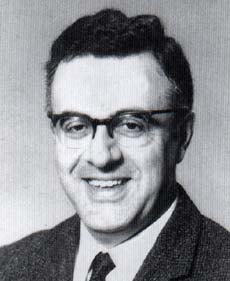 Richard Greening was Organist of Lichfield Cathedral from 1959 to 1977, but we were contacted by Alan Whitaker in 2010 who offered a personal recollection of Greening in his time before Lichfield.
The following material was previously published on the Cathedral Choir's website, but has been reproduced, more fittingly, here.
I sang in the choir at St Giles' Church in Oxford from 1949 until 1967, and then again for several years later on when I and my two sons sang together in the choir under Peter Ward Jones until we left the Oxford area in 1987.
When I first joined the choir as a probationer, the organist was Mr John Cantrell but when he applied for, and got, the post of organist at Chelmsford Cathedral (I believe) he was replaced by Richard Greening. Thus I sang under him in the choir of St Giles' church for the whole of his time as organist and choirmaster. I have nothing but extremely happy memories of that time. The choir was not huge, nor was it the "testing ground" for boys whose parents had aspirations for them to sing in one of the collegiate choirs in Oxford.
I remember him as an organist of prodigious talent, a choir master of great depth, but who built up excellent relationships with many of the boys in his charge. The boys' choir was made up of boys from schools as diverse as pure state schools, church schools and even New College and Magdalen College schools, so the boys had a huge range of backgrounds. One of the things I remember most vividly was during either our Tuesday or Thursday boys practices he encouraged us to suggest variations in pointing from that in our Parish Psalters. Those which he liked, he incorporated and at the Friday rehearsal with the gentlemen of the choir, they were told about them and we sang them from then on.
My family, unlike that of some of the other boys, had no direct association with the university, but Richard made a friend of my father and ultimately, my proudest achievement was to sing the whole of the solo treble part of Hear my Prayer in a liturgical context - standing beside him at the 'pusher' organ console at the back of the church playing so very beautifully with the rest of the choir singing their hearts: an experience for which I can never give enough thanks.
He was quite a disciplinarian, invoking hefty fines, records of which he kept in the choir register, for misbehaviour, but he had a soft heart when it came to pay-day. I had on occasion, lost all my pay (six shillings and sixpence in hand [the same into a bank account for us when we had to leave]), on account of fines, but I never went home empty handed! One other chorister regularly 'lost' all his pay. He too never went home with empty pockets. We could never be sure how much we would get, though, so it was worth turning up, and the singing was always fun.
I remember a couple of weeks when Richard was on holiday and choir practices were taken by a very young Bryan Kelly, who I was later to come across as Musical Director of the Oxford Operatic Society and who has since become a composer whose work I still enjoy singing when I can. He even wrote a wedding anthem for St Giles' Choir to sing at one of its member's wedding. He was a close friend, but my wife and I both sang in the first performance, and our mutual friend and his wife came back from their honeymoon, two weeks later they sang it again at St Giles for my wedding! This was, of course some years after Richard Greening had left St Giles.
During his time at St Giles he took a full part in church activities and was, I believe an active (if ex-officio) member of the PCC. When it came to the proposal to refurbish and move the Hill, Norman and Beard organ from inside the Lady Chapel to the space under the tower, he was as far as I can recall, an enthusiastic proponent - even though it meant accompanying the services on a tiny harmonium when the organ was in bits.
These recollections are just the tip of the iceberg. I fear I do not know if they are of any great value, but it would not be overstating the case that I really was very fond of Richard Greening as a boy. I believe that he saw potential in me and that he did his best to promote that. I have missed him all my life, and never forgotten the immense good he brought into it. He truly was a very kind and generous man and, like most organists and choir directors, he gave of himself to anyone who would pay heed to him and he formed very special friendships with several other members of the choir - especially with those in the back row and included my father, (a non-singer), among those. I am still a chorister, using what is left of my voice to the glory of God at St Nicolas' Church, Newbury under Sarah and Nic Cope's direction. Like Richard, they too are very special people.Alan subsequently got in touch again, to add the following details to his account:
I have found the Choir Register extract which I thought that I still had. It is a question of Bad News/Good News, though, as while I can pinpoint his last choir practice fairly precisely, - the register changes into a different handwriting (and pen) on Sunday 31st July 1955 - I think that he may still have been around for the rehearsals immediately prior to his wedding on 6th August 1955.
My parents took me away on holiday to Kent on his wedding day, so I could not attend, but the rest of the choir would have done so. I would, though, have warn you that there is no documentary evidence for the choir having done so, as the register seems not to cover the fairly considerable number of weddings and funerals we sang for as a choir in the 1950s. Equally, there may have been an augmented front row as the choir was decimated by holidays at the time. I was then Head Boy and the register shows that there were, including me, eight full choristers at the time with three probationers, and six gentlemen at the time. The following morning (Aug 7) there were eight boys (including one of the probationers) present and there were two full choristers, (me and one other), together with two probationers who were away on holiday.
The change of handwriting is quite dramatic and in any case August the sixth resonated with me for several other special people who have birthdays on that day. I am certain of it.
The opening date of his stint as st Giles' Organist and Choirmaster is more difficult as I originally made the copies to try to locate the date and the personnel who were involved in making a recording of several psalms - entirely for internal consumption. These were recorded under the leadership of Richard Greening's successor, Kenneth MacIntosh. The copies I made from the old registers go back no further than early 1955.
Sunday, 22 December 2019
Advent Hope (1998) from Lichfield Cathedral on the BBC
To celebrate the 21st anniversary of the live broadcasts in 1998, the four programmes which made up the BBC's Advent Hope series have been published on each of the Sundays of Advent on YouTube over the past four weeks.
The programmes were originally broadcast live at 9.30am, having been preceded by congregational rehearsals at 8.45am. After the broadcasts, the Cathedral Choir went on to sing Eucharist at its usual 10.30am slot on the second, third and fourth Sundays of Advent, and Evensong at 3.30pm on the second and third Sundays of Advent. Eucharist on the first Sunday of Advent was sung by the Cathedral's Chamber Choir, as the Cathedral Choir was singing the Darkness into Light carol service later in the evening. Evensong on the fourth Sunday of Advent was sung by the Chamber Choir, as the Cathedral Choir did the BBC Radio 3 Choral Evensong broadcast on Wednesday 23 December, and the choristers sang the Radio 4 Daily Service on Christmas Eve. (The Chamber Choir then went on to broadcast Midnight Mass on Christmas Eve on BBC Radio 4.) Christmas 1998 was a media-rich time at Lichfield!
The Advent Hope services were all introduced by the then Dean, The Very Reverend Dr N T Wright; the Organist and Master of the Choristers at the time was Andrew Lumsden, and the Assistant Organist was Robert Sharpe.
Advent Hope II
(originally broadcast 6 December, 1998; published 8 December, 2019)
Advent Hope III
(originally broadcast 13 December, 1998; published 15 December, 2019)
Advent Hope IV
(originally broadcast 20 December, 1998; published 22 December, 2019)
The programmes were originally broadcast live at 9.30am, having been preceded by congregational rehearsals at 8.45am. After the broadcasts, the Cathedral Choir went on to sing Eucharist at its usual 10.30am slot on the second, third and fourth Sundays of Advent, and Evensong at 3.30pm on the second and third Sundays of Advent. Eucharist on the first Sunday of Advent was sung by the Cathedral's Chamber Choir, as the Cathedral Choir was singing the Darkness into Light carol service later in the evening. Evensong on the fourth Sunday of Advent was sung by the Chamber Choir, as the Cathedral Choir did the BBC Radio 3 Choral Evensong broadcast on Wednesday 23 December, and the choristers sang the Radio 4 Daily Service on Christmas Eve. (The Chamber Choir then went on to broadcast Midnight Mass on Christmas Eve on BBC Radio 4.) Christmas 1998 was a media-rich time at Lichfield!
The Advent Hope services were all introduced by the then Dean, The Very Reverend Dr N T Wright; the Organist and Master of the Choristers at the time was Andrew Lumsden, and the Assistant Organist was Robert Sharpe.
Advent Hope I
(originally broadcast 29 November, 1998; published 1 December, 2019)
(originally broadcast 29 November, 1998; published 1 December, 2019)
Advent Hope II
(originally broadcast 6 December, 1998; published 8 December, 2019)
Advent Hope III
(originally broadcast 13 December, 1998; published 15 December, 2019)
Advent Hope IV
(originally broadcast 20 December, 1998; published 22 December, 2019)
Friday, 1 November 2019
Lichfield Cathedral Choir Programme: USA Tour 1988
Choir tours remain part of the outreach work that the Cathedral Choir does today. Having recently found the paperwork while clearing out, this post is a transcribed copy of the itinerary of the two-week tour that the Choir undertook immediately after Easter Day (Sunday 3 April) 1988. All members of the party stayed with host families at each of the locations visited. (And BA215 is still one of the daily flights from LHR to BOS.)
Choir Programme: USA Tour 1988
Monday 4 April
- 7.00 Depart School
- 10.15 (UK Time) Check in LHR T4
- 12.15 Depart London Heathrow Flight BA215
- 14.30 (US Time) Arrive Boston
- 15.30 Depart Boston (Coach)
- 20.30 Arrive Bangor - Meet hosts - Supper and bed.
Tuesday 5 April
- 10.30 Meet at St John's Church
- 12.30 Lunch at Church
- 14.00 Rest period
- 16.00 Tea and Rehearsal
- 18.00 Evensong at St John's Church
- 19.45 Supper
- 20.30 To hosts and bed
Wednesday 6 April
- 09.30 Meet at church for day out at Mount Dessert/Seaquarium/Bass Harbour with picnic lunch
- 15.30 Return to University and Maine Centre for the Arts
- 16.00 Rehearsal
- 17.45 To church for supper - collect robes
- 19.00 To Maine Centre for the Arts
- 19.30 Concert
- 21.30 Hosts collect from University
Thursday 7 April
- 08.00 Depart Church for Litchfield, Conneticut
- 16.00 Arrive St Michael's Church, Lichfield - Tea at church
- 16.30 Rehearsal
- 18.15 Supper at Church
- 19.30 Concert
- 21.15 Hosts collect from Church
Friday 8 April
- 09.00 Meet at church for tour and shopping
- 11.30 Depart for New Brunswick
- 15.30 Arrive New Brunswick, Christ Church
- 16.30 Rehearse
- 18.00 Supper at church
- 19.30 Concert
- 21.30 Depart for Philadelphia with hosts
Saturday 9 April
- 09.30 Meet St Peter's Church for shopping, etc.
- 12.00 Lunch at church
- 13.00 Depart from church for Washington, DC
- 16.00 Arrive St Mark's, Capitol Hill, Washington
- 16.30 Rehearsal
- 17.30 Supper at church
- 18.30 Reception
- 19.30 Concert
- 21.15 To hosts and to bed
Sunday 10 April
- 08.30 Meet at St. Mark's
- 09.00 Family Communion (Boys only sing)
- 10.00 Drink and walk
- 11.00 Parish Communion
- 12.15 To hosts for lunch and rest of day free
Monday 11 April
- 09.30 Meet at church (leave luggage) for trip to Space Museum
- 16.30 Rehearsal
- 17.30 Evensong
- 18.45 Supper
- 20.30 To hosts
Tuesday 12 April
- 09.00 Meet at Church for visit to Zoo and Washington Cathedral
- 13.30 To Washington National Airport
- 15.20 Depart EA879
- 17.20 Arrive Orlando; Coach to Cathedral; Tea
- 18.00 Rehearsal
- 19.00 Supper at Cathedral
- 20.00 Concert
- 21.45 Meet hosts - bed
Wednesday 13 April
- 09.00 Meet at Cathedral for day out at Sea World
- 14.45 Return to Cathedral
- 15.15 Rehearsal for boys
- 16.15 Rehearsal for men and boys
- 17.15 Evensong with choir of St Luke's Cathedral
- 18.30 To hosts - supper and bed
Thursday 14 April
- 09.00 Meet at Cathedral and depart for Epcot
- 18.00 Perform at Epcot
- 19.00 Depart Epcot for Tampa
- 19.30 Party at St John's Church, Tampa
- 21.00 on To hosts and bed
Friday 15 April
- 09.30 Meet at Church (St John's, Tampa)
- 11.30 Depart for Sarasota for Day on beach and picnic lunch
- 18.00 Rehearsal
- 19.00 Supper at Church of the Redeemer
- 20.00 Concert
- 21.45 Return to Tampa
Saturday 16 April
- 09.30 Meet at Church (St John's) for Rehearsal/Workshop
- 12.00 Lunch
- 13.00 Concert
- 14.00 Sightseeing
- 16.30 Meet at Church
- 17.00 Depart for Airport
- 19.20 Depart Tampa - Flight BA264
- 10.30 (UK Time) Arrive LHR
- 12.00 Coach to Lichfield
- 15.30/16.00 Arrive Lichfield. Tea at school.
Subscribe to:
Posts (Atom)